 Pecan
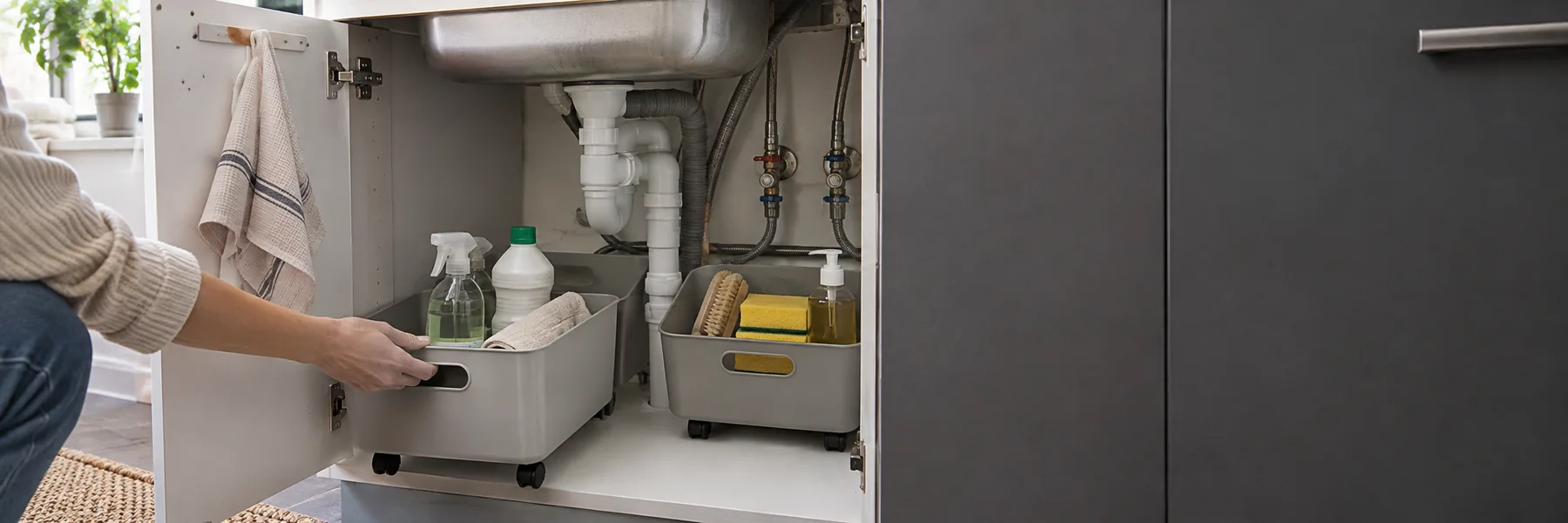
The cabinet under the sink has a talent for looking roomy right up until you open it. The drain takes the middle, supply lines run down one side, and a shutoff valve sits exactly where a shelf would look best. A pull-out organizer may fit on the cabinet floor and still be impossible to pull out once you put bottles on it.
Start with an empty cabinet. Take everything out and check what really needs to live there. Half-used cleaning supplies, spare cloths and duplicate bottles can make a cramped cabinet feel like a storage problem when the first fix is simply to move some of the stock elsewhere. Look for damp patches before covering the floor with bins. An organizer cannot solve a leak, and it can make a small one harder to notice.
Measure the space the organizer will travel through
Measure the clear width and depth at floor level, then check again at the height of the drain and any pipes. The upper shelf of a two-tier unit may hit the plumbing even when its base fits comfortably below it. The cabinet opening is another measurement: hinges, a door frame or a bin attached to the door can narrow the route in and out.
You can test an idea before ordering anything. Cut or fold a piece of cardboard to roughly the base size of the organizer you are considering. Pass it through the opening and move it forward along the path a pull-out shelf would take. Now hold one of your taller bottles at the height where the top tier would sit. This will tell you more about your own cabinet than a product photo taken in someone else's kitchen.
Mark the shutoff valves in a quick phone photo, then leave enough room to reach them by hand after the cabinet is filled.
When a pull-out is useful, and when it gets in the way
If one side of the cabinet stays clear from front to back, a pull-out can make bottles at the rear much easier to reach. This two-tier organizer in the Pecan catalog is an example of the type. Check the dimensions and configuration of the exact option on offer against your cabinet. Both tiers need room to move past the plumbing when loaded; fitting the base into an empty cabinet is only the first test.
If the drain crosses the only open strip of floor, two low bins may work better than a tall unit. Place one on each side of the pipes and lift either bin out when you need access. A plain tray is useful too, especially for things you take out together. A pull-out has little advantage if opening it means moving the rubbish bin first or holding the cabinet door at an awkward angle.
Keep frequently used items near the front. Less-used stock can go farther back if you can retrieve it without dismantling everything. Tall spray bottles may fit on the side with more headroom, while cloths and sponges can sit in a shallow container where the pipes come down. Let the cabinet's actual shape decide the arrangement.
Cleaning products need a separate decision
A neat row of bottles is not a child-safety measure. Some cleaning products need secure storage away from children and pets. Keep them in their original containers and follow their labels. Poison Control specifically advises locked, out-of-reach storage for caustic products. If a child can open the under-sink cabinet, find a safer location for those products before designing storage around them.
Once everything is back, try taking out the item at the very back. If one bottle requires emptying half the cabinet, the pipes are no longer the problem: there is too much in there.