 Pecan
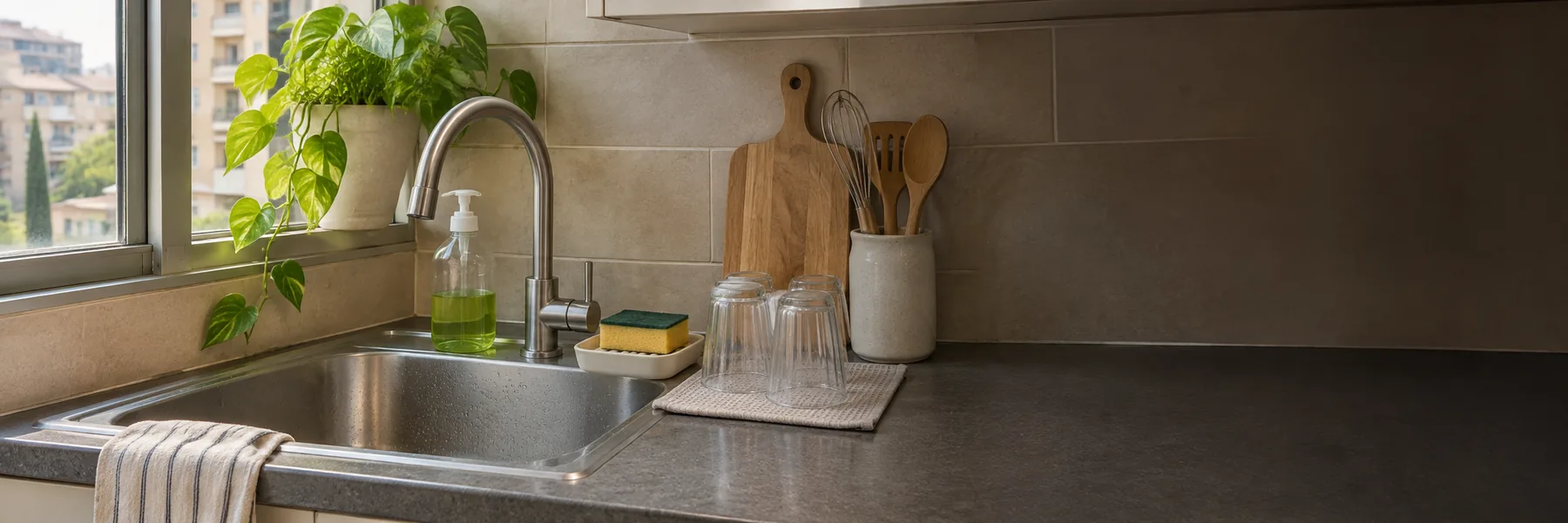
Dish soap, hand soap, a sponge, a brush and a few glasses drying beside the tap each have a purpose. Together, they can leave no room to use the sink. Before adding another organizer, separate three jobs: washing, drying and collecting scraps. An accessory that helps with one may get in the way of another.
Look at the area after the dishes have been put away. What remains? A wet sponge, bottles you rarely use or a tool waiting to dry are the permanent crowd. Dinner plates are a temporary one; they need a temporary place to go.
The route your hands take matters, too. In a narrow sink, a little basket can feel large if it sits directly between the tap and the drying area. With a double sink, one side might serve briefly for drying. With a single basin, anything placed across it should be easy to move when a pan needs washing.
Give the sponge somewhere accessible
A sponge left on the bottom of the sink sits where water and food scraps collect. A higher position can make the sink easier to use and clean, provided the sponge holder itself can also be washed. A small wire basket attaches to the side with suction cups. Check that your sink surface suits that attachment and that the basket is not where a large pan normally goes. You should be able to remove it and clean behind it.
You may already have a suitable place beside the sink. The aim is not to hide the sponge behind a row of bottles; it is to give it an obvious place without making the surrounding surface harder to reach.
Keep the bottles under the same scrutiny. Dish soap and hand soap may need to stay near the tap. A cleaning product used once a week probably does not. A small tray can catch drips beneath the everyday bottles, but only if you can lift and rinse it easily. A crowded tray tucked behind the faucet makes cleaning more work.
Drying space is useful only when the sink still works
For one or two glasses, a clean towel or a small drying spot may suffice. If dishes regularly occupy the counter, a roll-up rack across the sink can let them drip into the basin. It is more useful for a light, temporary load than for a household drying several pots at once.
Measure the width including the rims that would support the rack. Check the clearance around the tap and decide where the rack will go once it is wet and you need the basin again. Do not infer a safe weight limit from a product photo; look for instructions for the exact version. If the rack must be moved every time you rinse vegetables, it may not be the right answer for your routine.
Keep food scraps separate from storage problems
After washing vegetables or plates, small scraps often gather by the drain. A removable mesh strainer can collect them to empty into the bin. Fit matters more than the shape of its handle. Measure the drain opening and depth, and check that the handle will not interfere with dishes in the sink.
The strainer needs regular cleaning; it will not clear an existing blockage. If your sink already has a well-fitting strainer, replacing it adds little. For scraps created during food preparation, a small bowl on the counter that you empty before washing may be enough.
Try moving one thing away from the tap after tonight's dishes are done. Tomorrow, notice whether you missed it. That tells you more about the space than an immaculate sink photographed on a day nobody cooked.