 Pecan
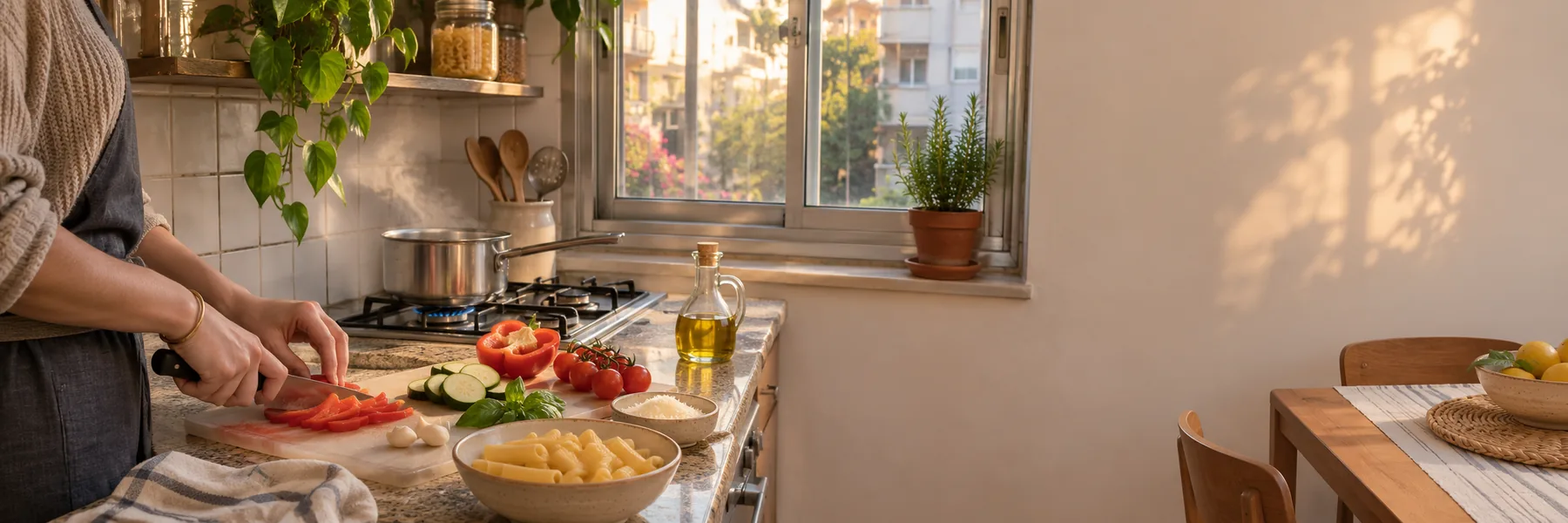
A small kitchen can look perfectly tidy at breakfast and run out of room by dinner. The cutting board is ready, but the rinsed vegetables, a bowl, a pan and the plates waiting to be served have all claimed a piece of the same counter. The useful question is what needs that surface during cooking, rather than how many new shelves you can squeeze in.
One dinner, three crowded moments
Imagine making pasta with vegetables. You take out the pot, pan, colander, plates and every ingredient before you cut a thing. The counter is full, though dinner has barely started. Try setting out only what you need for chopping. Once the vegetables are in the pan and the board is clear, bring out the pot and serving plates. The colander can wait until the water is close to boiling. This does not add an inch of counter space; it keeps three stages of the meal from competing for it at once.
Notice what happens between the board and the pan, too. Chopped vegetables need somewhere to wait, and peelings need somewhere to go. A bowl for each is enough; you do not need an elaborate prep station. If the whole process stops because there is nowhere to put one temporary plate, that is the spot to clear before looking for more storage.
Keep the cutting area usable
A cutting board needs a little room around it: space for uncut ingredients, a place for the chopped ones and a safe spot to set down the knife. It does not need half the kitchen. It does need to stay usable without moving the kettle or coffee machine every few minutes.
Start with things that occupy the counter all day but play no part in most meals. A paper towel roll is a small example. If it continually gets in the way, an adhesive holder mounted beneath a cabinet could keep it within reach. Check the cabinet door's swing, how you would pull a sheet and whether you could replace the roll easily. If the only available position is awkward or too close to heat, moving the roll to another shelf is simpler.
Make room for things waiting their turn
Cooking also calls for a small landing place: a bowl of washed vegetables, a spoon lifted from the pan, a plate ready to serve. If all of them end up on the cutting board, work stops at every transition. Try keeping one small spot for ingredients waiting to go in and another for things to clear away. A bowl you already own can collect peelings as you cut, saving repeated trips to the bin. The aim is a clear route between board, sink and stove, not a set of matching accessories.
Finally, give every tool two homes: one while it is being used and one after it has been washed and dried. A rack that rolls up but has nowhere to go will live on the counter. A colander folded while wet has not finished its job. If both homes do not exist yet, adjust the order of the meal before buying another object. Clear the board before the pan comes off the stove, or wash and chop produce before setting out serving dishes.
The best space saver in a small kitchen earns its place at the exact moment you need the room — and disappears easily when you are done.